


Nowadays the research area is highly sought for the by the newly masters or with a PhD, or even people still studing.
In order to pay for tuition, books and other expenses, students need to thoroughly explore a variety of funding options. Scholarships are one of the best ways to obtain extra money for college, but students are often unsure about where exactly to find scholarships for which they qualify.
But, how can you get a scholarship in psychology? What kind of requirements must you have in order to fulfill an application?
First step must me looking for information about opening of contests and research scholarships, you may start with your school's information board, Online databases our with your school's guidance counselor.
Students interested in psychology are often dismayed to find few scholarships targeted directly at psychology majors. However, with a little effort and investigation, you can uncover financial awards that are right for your needs. Don't get discouraged if your school does not offer any scholarships that are specifically for psychology students. Many scholarships are aimed at students pursing a range of majors. The best advice is to cast a wide net. Find as many scholarships as you can and start completing applications.
Here's some places you may take a look at:
Fast web
Psi Chi
APA (American Psychological Association)
Now, about the requirements, they can be quite much, but for most of them you just need a dregree and some experience in the are. Good luck, fellow!
Wednesday, December 12, 2012

Saturday, November 3, 2012
Antisocial Personality Disorder vs. Psychopathy
Serial Killers is a subject that nowadays appears in every newspaper and in some point in normal conversations. But, what is in fact a serial killer? How can you distinguish it from simple antisocial personality disorder?
A study published by Discovery Investigation had explored this subject, here's what they say about this controversy:
"Mental health professionals use the Diagnostic and Statistical Manual of Mental Disorders (DSM), developed by the American Psychiatric Association, to understand the illnesses of their patients and how to treat them. The DSM doesn't list serial murder among the 300 known mental disorders catalogued in its pages. It does, however, describe antisocial personality disorder, or ASPD. It's this condition that describes the behavior of many serial killers.
To understand ASPD, it helps to review the DSM criteria used to diagnose it. The most obvious indicator of the disorder is a total disregard for laws and social norms. People with ASPD have a long history of arrests and are often involved in physical fights or assaults. Some are capable of lying, cheating and deceiving so skillfully it is difficult to know when they are telling the truth or lying. They also act impulsively, with little care given to the safety of themselves or others.
To be diagnosed officially with ASPD, a person must be 18 years old, but symptoms generally begin to appear earlier, sometimes in the early teens. Adults with ASPD struggle to stay employed and, as a result, often have financial problems, according to the DSM. The manual also mentions that the disorder occurs more frequently in men than women — about 3 percent versus 1 percent.
Experts describe psychopathy as a more severe form of ASPD. Psychopaths have the antisocial symptoms just mentioned, but they also have additional traits that make them especially difficult to diagnose and treat. Chief among these traits is a lack of remorse or guilt for their actions. They also tend to be highly paranoid and suspicious.
Robert D. Hare of the University of British Columbia, a pioneer in the field, developed a diagnostic tool for psychopathy that measures the same antisocial symptoms as the DSM, but also evaluates interpersonal criteria, such as lack of empathy and shallow emotions. The tool is known as the Hare Psychopathy Checklist — a collection of 20 criteria that measure a person's antisocial behavior, emotional and interpersonal traits, and other factors.
The highest possible score is 40, but someone who scores 30 points is considered a psychopath, according to Kent Kiehl and Joshua Buckholtz, who explored the mind of a psychopath for Scientific American. Interestingly, the average score on the Hare Psychopathy is 4, write Kiehl and Buckholtz. That just means that psychopathy is a continuum, the way many other disorders are. It also means most psychopaths are not violent and are not destined to commit murder. A few, however, fall at the far end of the scale. These violent psychopaths may include serial killers."
So, hey you, be careful!
A study published by Discovery Investigation had explored this subject, here's what they say about this controversy:
"Mental health professionals use the Diagnostic and Statistical Manual of Mental Disorders (DSM), developed by the American Psychiatric Association, to understand the illnesses of their patients and how to treat them. The DSM doesn't list serial murder among the 300 known mental disorders catalogued in its pages. It does, however, describe antisocial personality disorder, or ASPD. It's this condition that describes the behavior of many serial killers.
To understand ASPD, it helps to review the DSM criteria used to diagnose it. The most obvious indicator of the disorder is a total disregard for laws and social norms. People with ASPD have a long history of arrests and are often involved in physical fights or assaults. Some are capable of lying, cheating and deceiving so skillfully it is difficult to know when they are telling the truth or lying. They also act impulsively, with little care given to the safety of themselves or others.
To be diagnosed officially with ASPD, a person must be 18 years old, but symptoms generally begin to appear earlier, sometimes in the early teens. Adults with ASPD struggle to stay employed and, as a result, often have financial problems, according to the DSM. The manual also mentions that the disorder occurs more frequently in men than women — about 3 percent versus 1 percent.
Experts describe psychopathy as a more severe form of ASPD. Psychopaths have the antisocial symptoms just mentioned, but they also have additional traits that make them especially difficult to diagnose and treat. Chief among these traits is a lack of remorse or guilt for their actions. They also tend to be highly paranoid and suspicious.
Robert D. Hare of the University of British Columbia, a pioneer in the field, developed a diagnostic tool for psychopathy that measures the same antisocial symptoms as the DSM, but also evaluates interpersonal criteria, such as lack of empathy and shallow emotions. The tool is known as the Hare Psychopathy Checklist — a collection of 20 criteria that measure a person's antisocial behavior, emotional and interpersonal traits, and other factors.
The highest possible score is 40, but someone who scores 30 points is considered a psychopath, according to Kent Kiehl and Joshua Buckholtz, who explored the mind of a psychopath for Scientific American. Interestingly, the average score on the Hare Psychopathy is 4, write Kiehl and Buckholtz. That just means that psychopathy is a continuum, the way many other disorders are. It also means most psychopaths are not violent and are not destined to commit murder. A few, however, fall at the far end of the scale. These violent psychopaths may include serial killers."
So, hey you, be careful!
Tuesday, October 9, 2012
Personality and Social Behavior by Frederick Rhodewalt
Here's a pretty cool book to read if you're really into psychology and social behavior: Personality and Social Behavior by Frederick Rhodewalt
Take a look at the sinopse:
The study of the relationship between the person and the situation has had a long history in psychology. Many theories of personality are set on an interpersonal stage and many social phenomena are played out differently as the cast of characters change. At times the study of persons and situations has been contentious, however, recent interest in process models of personality and social interaction have focused on the ways people navigate, influence, and are influenced by their social worlds.
Take a look at the sinopse:
The study of the relationship between the person and the situation has had a long history in psychology. Many theories of personality are set on an interpersonal stage and many social phenomena are played out differently as the cast of characters change. At times the study of persons and situations has been contentious, however, recent interest in process models of personality and social interaction have focused on the ways people navigate, influence, and are influenced by their social worlds.
Personality and Social Behavior contains a series of essays on topics where a transactional analysis of the person and situation has proved most fruitful. Contributions span the personality and social psychology spectrum and include such topics as new units in personality; neuroscience perspectives on interpersonal personality; social and interpersonal frameworks for understanding the self and self-esteem; and personality process analyses of romantic relationships, prejudice, health, and leadership.
This volume provides essential reading for researchers with an interest in this core topic in social psychology and may also be used as a text on related upper-level courses.
Tuesday, October 2, 2012
Reading Minds with Body Language Psychology
Here's a new kind of use of psychology: Can body language helps to read minds?


Monday, September 17, 2012
Living with a Mental Disorder
First of all, let's understand what a "mental disorder" is.
According to sources as wikipedia, a mental disorder can be described as a psychological pattern or anomaly, pottentially reflected in behavior, that is normally associated with conditions as distress or disability, and is not considered part of normal development of a person's culture life.
Now everyone must be thinking how does this kind of thing happens, what may triggers it, what are really the causes for this mental disorders? Well, they are very varied and, in some cases unclear and complex, there are several studies across the world about this subject but there's no right and clear answer yet.
These menatal disorders are diagnosed by psychiatrist that provide a medical diagnosis associating several symptoms and signs to particular types of disorders and to wich are prescribed methods of treatment such as psychotherapy, medication or other treatment methods such as electroconvulstive therapy and counseling.
Nowadays, having a mental disorder does not mean you cannot have a normal life, just consult a specialist and get on with your life.
According to sources as wikipedia, a mental disorder can be described as a psychological pattern or anomaly, pottentially reflected in behavior, that is normally associated with conditions as distress or disability, and is not considered part of normal development of a person's culture life.
Now everyone must be thinking how does this kind of thing happens, what may triggers it, what are really the causes for this mental disorders? Well, they are very varied and, in some cases unclear and complex, there are several studies across the world about this subject but there's no right and clear answer yet.
These menatal disorders are diagnosed by psychiatrist that provide a medical diagnosis associating several symptoms and signs to particular types of disorders and to wich are prescribed methods of treatment such as psychotherapy, medication or other treatment methods such as electroconvulstive therapy and counseling.
Nowadays, having a mental disorder does not mean you cannot have a normal life, just consult a specialist and get on with your life.
Friday, August 24, 2012
Are you a gambler?
The psychology of gambling, learn how your brain opperates when you're playing and you just lose the illusion of control.

Friday, August 3, 2012
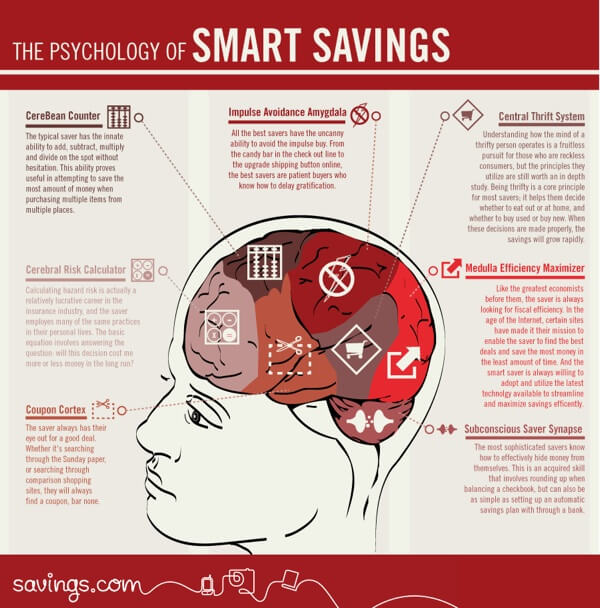
Smart Savings
In a time where economic crisis is the theme of the day, the psychology of smart savings starts to appear.
Subscribe to:
Posts (Atom)